Unity Intercom Alternatives: The Production Intercom Bench
By the SoftSea editorial team
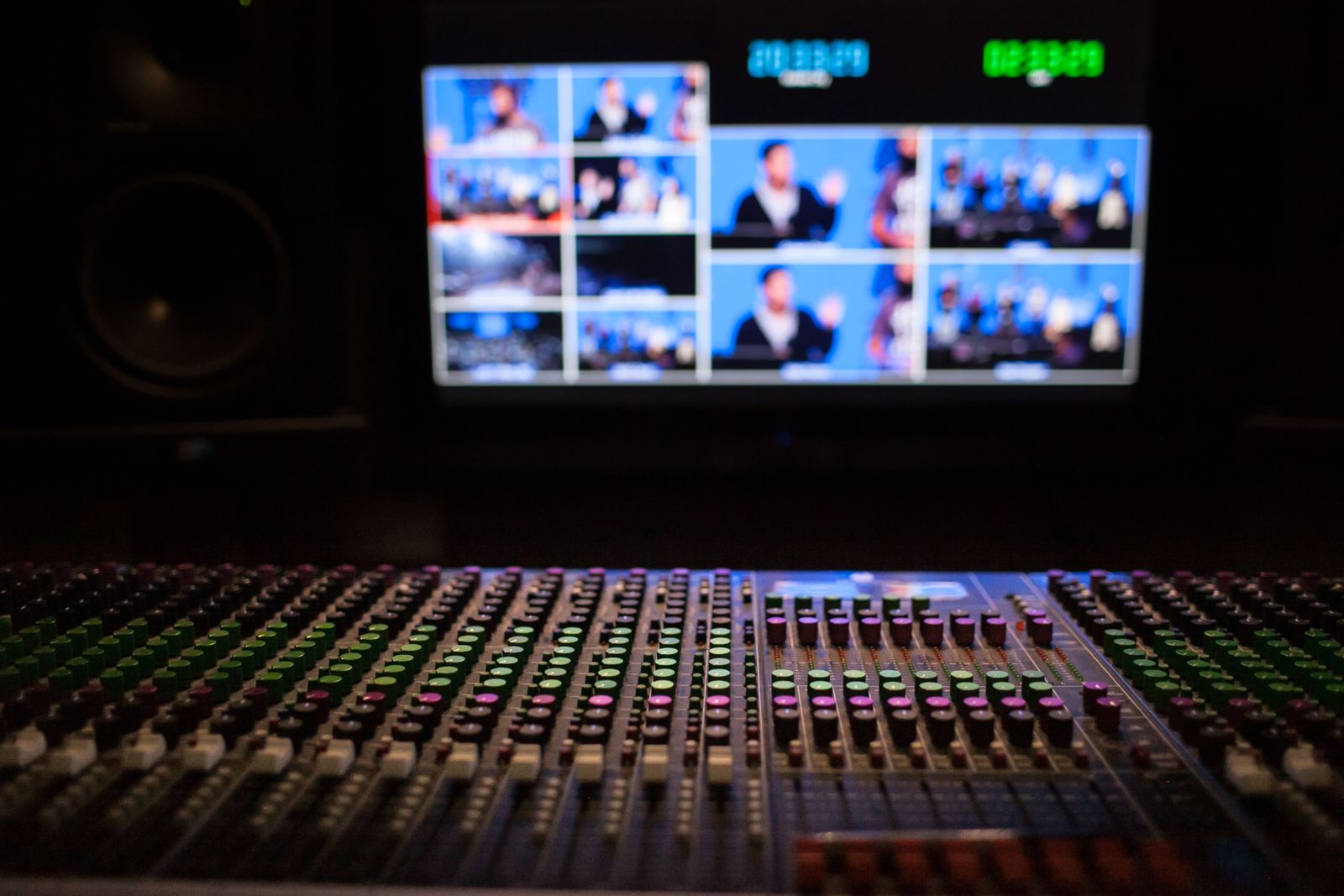
Photo: Luke Yanko / Pexels
First, which Unity and which intercom
Search engines conflate this name three ways, so the bench has to be stated before it can be graded. Unity Intercom is a production intercom system by Audivero LLC: a server that runs on a Mac, client apps for phones and computers, and full-duplex talkback channels for the crews who run live video, broadcast, and events. It is not Unity the game engine, and it is not Intercom the customer support platform, whose listicles are what the bare query returns. Readers who maintain an apartment buzzer want the ring intercom bench on this site; readers who staff a help desk want the Intercom support benches. Readers who need a director, two camera operators, a graphics operator, and a stage manager talking over each other on separate channels during a live show are in the right place, and almost nobody writes for them: the production intercom field is graded on vendor and dealer pages, not in guide form, and the price shapes are never lined up against each other.
Tool
Shape
License shape
Deciding strength
Unity Intercom
Software server on a Mac plus phone and computer clients
Server Base License $659.99 one-time, including 3 user licenses; Pro add-on $54.99 per month or $599.99 per year
Full production feature set (channels, groups, tally, program feed) with no hardware matrix
Clear-Com Agent-IC
Mobile client for installed Clear-Com matrix intercom systems
Licensed per connection through Clear-Com dealers; price quoted, not published
Extends a hardware intercom the venue already owns to remote crew phones
Zello Work
Push-to-talk app platform for phones and radios
Free tier for small networks; paid Work tiers priced per user
Instant talkback for field and fleet teams with almost no setup
Hardware partyline (Riedel, Green-GO class)
Beltpacks, base stations, wired or wireless partyline
Capital purchase plus per-station hardware cost
The reliability baseline every software system is measured against
Unity Intercom: the incumbent, graded on its own terms
Unity Intercom (in the dataset with vendor prices read on unityintercom.com on November 20, 2026) sells a shape the subscription field has mostly abandoned: you buy the server once. The Server Base License is $659.99 one-time and includes 3 user licenses; expansion is also itemized on the vendor page, with an I/O License at $259.99, an Advanced Program Feed License at $529.99, Expanded Channels and Groups at $789.99, and a Connect license at $659.99. The base shape carries up to 6 channels; the Pro add-on, at $54.99 per month or $599.99 per year, is the subscription layer on top for crews who need its extended features. The grading consequence is that Unity's cost curve flattens: a crew that runs for five years pays the license once and the Pro fee if it wants it, while a per-user platform bills every seat every month forever. The duties are the mirror image: your Mac server is your uptime, your network is your audio quality, and there is no vendor status page to blame when a venue's Wi-Fi collapses mid-show. The comparison below puts Unity, Zello Work, and Agent-IC side by side from the dataset.
Interactive tool
Comparison Builder
Pick two or three products and see them side by side on the numbers that decide the purchase.
Measure
Unity Intercom
Zello Work
Clear-Com Agent-IC
Starting paid price
Not published
Not published
Not published
Free option
No free plan; the client apps are free downloads and the server is a paid license
Free plan: a free tier for small networks is offered; paid Work tiers add management and history
No free plan; the app is licensed per connection through Clear-Com dealers
Plans
Server Base License: not published · Pro add-on: not published
Work: not published
Agent-IC license: not published
Platforms
macOS, iOS, Android, Windows
Web, iOS, Android, Windows
iOS, Android
Best for
live video production crews, broadcast and event teams, venues running multi-channel talkback
field and fleet teams, venues that need talkback without production features, teams spread across sites
broadcasters with installed Clear-Com systems, large venues and touring productions, crews adding remote panels to an existing matrix
Strengths
One-time license shape in a subscription category; Built for live production: channels, program feed, and tally on the phone; Runs on devices the crew already owns
Runs on any phone, no intercom hardware at all; Voice history and replay, which hardware partyline lacks; Scales to fleets and field teams, not just one venue
Extends the intercom a venue already owns instead of replacing it; Ties into professional matrix and IP intercom infrastructure; The production-grade route for large broadcasters
Watch out for
The server runs on a Mac; there is no Windows server; Feature licenses (I/O, expanded channels, advanced program feed) stack on top of the base price; A niche production tool, not a general team chat app
Voice only: no program feed or production tally; A subscription per user, forever, against one-time intercom licenses; Depends on mobile data quality in the field
Useless without a Clear-Com system behind it; Dealer pricing, never a published figure; Overkill for a small crew that owns no intercom hardware
Lowest entry price: Unity Intercom. Real free plan: Zello Work. Entry price is the floor, not the decision: check the plan line above for the tier that actually includes the feature you need.
All figures from vendor pricing pages, checked November 18, 2026. Some vendors price by contacts, tasks, or operations instead of seats; those notes are in the plan data and the linked pricing guides.
Clear-Com Agent-IC: the right answer when the matrix already exists
Agent-IC is not a Unity Intercom replacement so much as a different purchase answering a different installed base. Clear-Com matrix systems are the installed standard in broadcast plants and large venues; Agent-IC is the vendor's mobile client that turns a phone into a panel on that matrix, licensed per connection and sold through dealers, which is why its price is an honest null in the dataset: it is quoted against your system, not published. If your venue already runs a Clear-Com frame, Agent-IC is the cheapest credible way to put remote producers and off-site directors on the same talkback as the in-house crew, and no standalone software purchase reproduces it, because the value is the matrix behind the app. If you do not own the matrix, the app has nothing to connect to, and the comparison collapses back to Unity's self-contained server or Zello's cloud. Grade Agent-IC as an extension purchase, never as a standalone bench entry.
Zello Work: push-to-talk, honestly scoped
Zello Work is the bench's lightweight: a push-to-talk platform with a free tier for small networks and paid Work tiers that add management and history, priced per user with figures the dataset carries as nulls because they were not read to its verification standard. The honest scoping matters more than the price. Push-to-talk is half-duplex discipline: one voice at a time per channel, which field teams, fleets, and venue runners live with happily because their talkback is short commands, not a director counting a show in over a music bed. Production talkback is full-duplex and interrupt-driven; a director who cannot cut in mid-sentence does not have intercom, whatever the app calls itself. Zello earns its row for crews whose Unity problem is really a reach problem (people spread across sites who need a shared channel today, with no server and no show-critical timing), and it loses the row the moment the work is a live production with cues.
What actually decides a production intercom
Four checks, in order. Duplex: confirm every candidate carries simultaneous full-duplex talk on your channels, not push-to-talk with a production skin. Channel and user math: count your real talk groups (director, cameras, audio, stage, producers) and price each system at that count, including Unity's expansion licenses and Zello's per-user tiers at renewal size. Program feed and tally: if your crew works to a program feed or needs tally indication, confirm the exact license tier that carries it before the purchase, because on Unity it is a named add-on, not a default. Failure shape: decide what a dead channel costs during a show, and let that price choose between your own server, a vendor cloud, and hardware partyline; the cheapest system that fails during the one show that matters is the most expensive one you own.
The verdict
Buy the server once and run your own talkback: Unity Intercom, with the expansion licenses priced into the first purchase and Pro treated as optional. Extend the matrix you already own: Clear-Com Agent-IC, quoted through a dealer against your frame. Cover a spread-out field team today: Zello Work, accepting half-duplex as the trade. And keep the hardware baseline in view: when the show cannot fail, beltpacks and a base station remain the reference, and the software bench exists for the crews whose budget or footprint rules hardware out.
Interactive tool
The production intercom checklist
Check off each step as you finish it. Your progress stays on this page.
0 of 6 complete
0% done
Related guides
The shortlist does not end here. These related guides cover the sibling tools, matchups, and pricing questions closest to this one.
A production intercom system by Audivero LLC. A server application (running on a Mac) plus client apps turn phones and computers into full-duplex intercom stations with channels, groups, tally, and program feed for live video, broadcast, and event crews. It shares a name with the Unity game engine and the Intercom support platform and is neither.
How much does Unity Intercom cost?
The Server Base License is $659.99 one-time and includes 3 user licenses, read on the vendor pricing page on November 20, 2026. Expansion licenses are itemized (I/O at $259.99, Advanced Program Feed at $529.99, Expanded Channels and Groups at $789.99), and the Pro add-on is $54.99 per month or $599.99 per year.
What is the closest alternative to Unity Intercom?
Clear-Com Agent-IC if your venue already runs a Clear-Com matrix: it puts phones on that matrix as licensed connections. Without a matrix, the closest software shapes are push-to-talk platforms such as Zello Work, which trade full-duplex talkback for zero infrastructure.
Is Zello a real intercom replacement?
For field and fleet talkback, yes; for live production, no. Zello is push-to-talk, so one person speaks at a time per channel. A director calling cues needs full-duplex, interrupt-capable channels, which is the feature that separates production intercom from radio apps.
Why is Agent-IC pricing not listed?
Clear-Com sells Agent-IC connections through dealers against an installed system, so there is no published list price to quote honestly. The dataset carries it as a null rather than inventing a figure; budget for a dealer quote sized to your matrix and connection count.
Photo credits: Luke Yanko (Pexels). Photos are served from this site; follow the credit to the library page for the original.